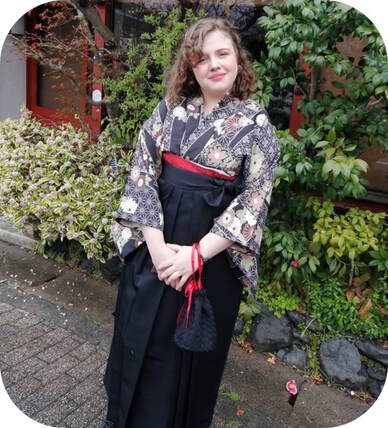

Welcome!
|
My name is Kat!
キャットと申します。 Kyoto University Graduate School of Education Educational Cognitive Psychology Course, Manalo Laboratory, Doctoral course 京都大学大学院教育学研究科 教育認知心理学講座, マナロ研究室, 博士後期課程 |
-
English
-
日本語
<
>
“Language” is more than a set of words or grammatical rules, but the living expression of a community’s culture, memory, and worldview. To learn a language is to step into a new world, rich with its own histories, values, and ways of seeing. As Wittgenstein observed, “The limits of my language mean the limits of my world.” Language does not merely describe reality—it shapes it.
Language influences how we think, relate to others, and construct who we are. From perspectives like seen in Social Identity Theory, language is a key marker of group membership. It signals belonging, creates boundaries, and influences how we perceive both ourselves and others. But this sense of identity is not fixed.
However, instead of a permanent, unchanging “I," who we are can be seen as fluid, relational, and shaped by causes and conditions, including the languages we speak and the cultural worlds we inhabit. Categories and labels we use are useful and can guide us in understanding our place in the world, but they can also constrain and divide.
Through understanding the complexities of language use in multilingual contexts, I hope to understand language not only as a cognitive system to be studied, but as a way to encounter other lives, question our assumptions, and reimagine the self as something dynamic and interconnected. In doing so, I aim to live as a bridge between communities, using language as a tool for mutual understanding, humility, and transformation.
Research Interests
Psychology
I am currently a doctoral candidate in the Division of Cognitive Psychology in Education at Kyoto University, conducting research in psycholinguistics on topics such as predictive processing (surprisal response), social biases, immigrant/multilingual issues, and the language processing of non-native speech. I already hold a Master's in Cognitive Psychology, during which I conducted research on the audiovisual processing of multilingual speakers. I am also part of research looking at how the sociolinguistic framework of multilingual communication can be translated into pedagogical techniques through the use of TTRPGs, and at understanding World Citizenship Education within an East Asian context, and am a DoGS Fellow through the Japan Science and Technology Agency (JST).
Philosophy
I have interests in the philosophy of mind and enactivism in cognitive sciences. My studies are rooted in Buddhist and Hindu debates on selfhood and epistemology, focusing on the Anattā/Ātman divide, drawing on the works of Nārgājuna and Shāntideva. Now my interests are reconciling Buddhist/East Asian thought with Western philosophy, especially through traditions such as the Kyoto School, as well as theories of selfhood, such as bundle theory in Hume and Parfit, and metaphysical views that similarly decenter the individual self, such as those found in Spinoza.
Japanese Thoughts
My research includes examining how ideas of “Japaneseness” have been formed across Japanese intellectual, religious, and political history, and how those ideas continue to shape social life in Japan today. This is how Japanese identity has been constructed, moralised, and positioned against perceived outsiders, especially how these historical frameworks inform the out-grouping of immigrant and foreign residents in contemporary Japan, with attention to language use, belonging, and communicative expectations. This drawing includes a diversity of works from early Japanese literature and religion (such as Motoori Norinaga) to more modern works by Masao Maruyama, Tetsurō Watsuji, and Yamakawa Kikue.
My Life
I was born in Michigan but moved frequently while growing up, living in Virginia and Tennessee. Currently, I live in Kyoto, Japan. I first moved to Japan in 2019, living in Nara City and attending Nara University of Education for a one year foreign exchange. I moved to Kyoto in 2022 to complete a two-year master's program at Kyoto University and have been a doctoral student since April 2024.
Outside my research, I have many interests, such as Tae Kwon Do, reading, tea, art, writing fantasy stories, and studying language. I particularly enjoy reading Chinese and Japanese literature, but I have a general love of all mythologies. I also enjoy playing games like DND with friends and in general getting to meet new people.
On weekends, I like hiking with my significant other and our dog named Momotaro, sketching pretty scenery, or going to the workshop to make wooden pieces with a jigsaw.
Hobbies
|
As an artist, I draw inspiration from many different sources. In general, I tend to work in the following mediums including digital art, ink, photography, and jigsaw art.
If you are interested in following my artwork, feel free to see my art Instagram (@kyatto_gallery) or reference my Art Portfolio. |
How to Support Me
My ultimate goal is to ensure transparency as an academic researcher, share interesting ideas with those who love learning languages, and help encourage anyone interested in learning the Japanese language.
I aim to make my research more accessible by writing articles on Substack (English) and note (Japanese) for a general audience who may either struggle to read complicated academic articles or can't access my research hidden behind a journal's paywall.
I am incredibly thankful anyone who engages with my research. However, if you also wish to provide financial support, the primary ways are to become a paid subscriber through Substack and Note.
「言語」とは単なる言葉以上のものであり、コミュニティ全体の文化、伝統、そして統一を表しています。言語を学ぶことは、新たな歴史と世界に足を踏み入れることです。言語を学ぶということは、独自の歴史や価値観、ものの見方が息づく新たな世界に足を踏み入れることでもあります。ヴィトゲンシュタインが述べたように、「私の言語の限界は私の世界の限界を意味する」のです。言語は現実をただ記述するだけでなく、それ自体が私たちの現実の枠組みを形づくっているのです。
言語は、私たちの思考のしかた、他者との関係の築き方、そして自己のあり方にまで影響を与えます。社会的アイデンティティ理論のような視点からは、言語は集団への所属を示す重要な指標とされます。言語は、帰属意識を生み、境界線を描き、私たちが自分自身や他者をどう認識するかに深く関与しています。しかし、この「自分」という感覚は決して固定的なものではありません。
むしろ、「私」という存在は、永続的で不変のものではなく、話す言語や身を置く文化的世界を含むさまざまな縁によって形づくられる、流動的で関係性に基づいたものとして捉えることができます。私たちが使う言葉やラベル、分類は、世界のなかでの自分の立ち位置を理解する手がかりにはなりますが、ときにそれらは私たちの視野を狭めたり、分断を生んだりもします。
多言語的な文脈における言語使用の複雑さを理解することで、私は言語を単なる認知システムとしてではなく、「なっていく」ための実践として捉えたいと考えています。言語を通して他者の人生に触れ、自らの前提を問い直し、自己をより動的で相互に関わり合うものとして再構成していく。そうした営みの中で、私は言語を、異なるコミュニティの間に橋を架けるための手段として用い、相互理解と謙虚さ、そして変容をもたらす力として生きていきたいと思っています。
研究関心
心理学
現在、京都大学大学院教育学研究科・認知心理学講座の博士後期課程に在籍しており、心理言語学の立場から、予測処理(サプライズ反応)、社会的バイアス、移民・多言語社会をめぐる問題、非母語話者の発話の言語処理などをテーマに研究を行っています。修士課程では認知心理学を専攻し、多言語話者における視聴覚処理に関する研究に取り組みました。また、多言語コミュニケーションの社会言語学的枠組みをTTRPGの活用を通して教育実践へと応用する研究や、東アジアの文脈における世界市民教育のあり方を考える研究にも関わっています。さらに、科学技術振興機構(JST)によるDoGSフェローにも採択されています。
哲学
心の哲学および認知科学におけるエナクティヴィズムにも関心を持っています。私の思想的関心は、仏教とヒンドゥー思想における自己や認識をめぐる議論に根ざしており、特にアナッター/アートマンの対立を中心に、ナーガールジュナやシャーンティデーヴァの思想を手がかりに考えています。現在は、京都学派をはじめとする伝統を通して、仏教・東アジア思想と西洋哲学をどのように接続できるかに関心があります。あわせて、ヒュームやパーフィットの束論のような自己論や、スピノザに見られるような、個人としての自己を中心化しない形而上学的立場にも関心を寄せています。
日本の思想
研究には、「日本らしさ」という観念が、日本の思想史・宗教史・政治史のなかでどのように形成されてきたのか、そしてそれが現代の日本社会においてどのように社会生活を形づくり続けているのかを検討することも含まれます。とりわけ、日本人アイデンティティがどのように構築され、道徳化され、そして「外部」とみなされる人々に対してどのように位置づけられてきたのかに関心があります。特に、こうした歴史的枠組みが、現代日本における移民や外国ルーツの住民の他者化にどのように影響しているのかを、言語使用、帰属意識、コミュニケーションにおける期待という観点から考えています。この関心は、本居宣長のような日本古典・宗教思想から、丸山眞男、和辻哲郎、山川菊栄といった近現代の思想家まで、多様な著作を対象としています。
自分の人生
ミシガン州で生まれ、バージニア州とテネシー州、ミシガン州を行き来しながら育ちました。初めて日本に来たのは2019年で、奈良市に住み、奈良教育大学に通っていました。2022年に大学を卒業した後、京都に引っ越して京都大学で2年間の修士課程を入学しました。2024年4月からは、京都大学の博士課程に在籍しています。
研究以外では、テコンドー、読書、お茶、アート、ファンタジー小説の執筆、言語学習など、多くの趣味があります。特に中国文学や日本文学を読むのが好きですが、神話全般に対しても強い興味があります。また、友人と一緒にDNDのようなゲームをしたり、新しい人と出会うことも楽しんでいます。
週末には、彼氏と飼い犬の桃太郎と一緒にハイキングに行ったり、綺麗な景色をスケッチしたり、ジグソーを使って木工品を作るために倉庫に行くのが好きです。
趣味
|
アート ー アーティストとして、さまざまなものから創作のインスピレーションを得ています。主な表現媒体は、デジタルアート、インク画、写真、ジグソーアートなどです。
私の作品にご興味がありましたら、アート専用Instagram(@kyatto_gallery)または「Art Portfolio」をぜひご覧ください。 |
サポート方法
私の目標は、研究者として透明性を確保し、外国語学習に関する興味深いアイデアを共有し、日本語を学びたい人々を応援することです。
研究をより多くの人に届けるため、学術論文が読みづらかったり、オープンアクセスで発表できずにジャーナルの有料壁の背後に隠れてしまう場合には、英語ではSubstack、日本語ではnoteで記事を書く予定です。
この研究に関わってくださる全ての方々に心から感謝しています。しかし、経済的に貢献していただける場合、主な方法としてSubstackやnoteでの有料購読があります。